Numismatic Programme 2026
HEROISM AND GLORY
The Greeks had an eventful and tumultuous history, littered with wars, foreign invasions and conquests, until they founded the modern Greek state in the 19th century. They managed to navigate these turbulent waters, maintain their language and survive as a nation over the millennia because they have always prized military valour, one of the cardinal virtues of a Greek across time. No wonder, Greek history is full of examples of heroism and glory.
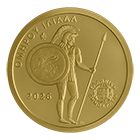
Greek, and admittedly all of European, literature starts with Homer’s Iliad, an epic almost 16 thousand verses long that celebrates the “glorious deeds of heroes”. The plot gets rolling with a quarrel between the Greek commander-in-chief in the Trojan War, Agamemnon, and his most formidable fighter, Achilles, who was raised on the precept “always to be the bravest and to surpass all others”. Achilles’ wrath is the first theme in our new series of gold coins dedicated to Homer’s Iliad.
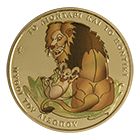
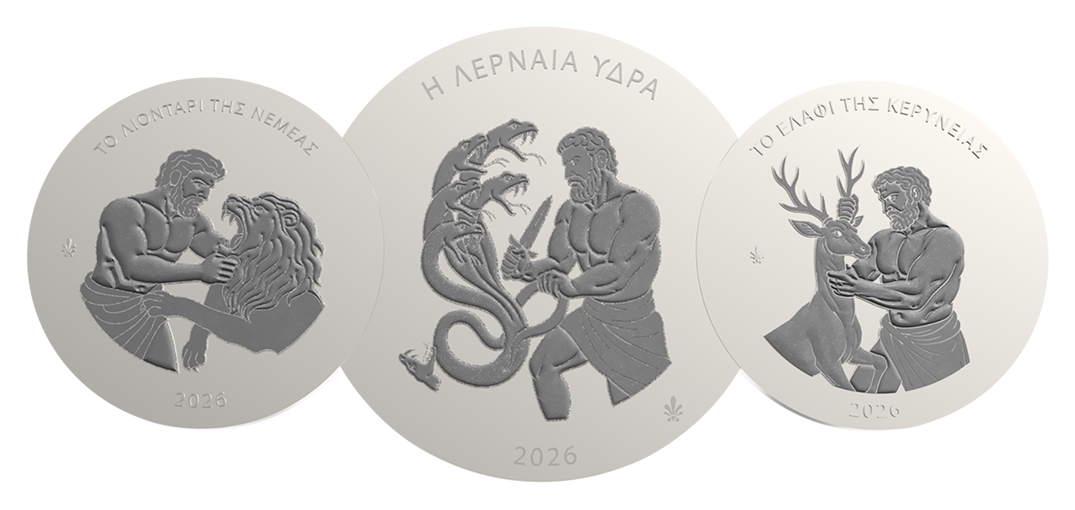
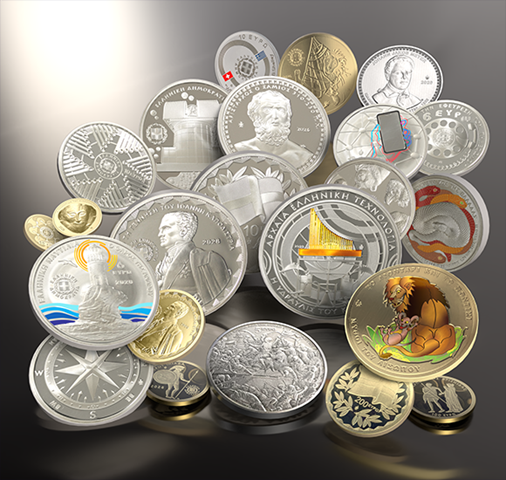
Hercules, the greatest Greek hero, is the theme of a new series of collector silver coins dedicated to The labours of Hercules, to be issued in puzzle coin sets. The series starts with three coins that piece together to tell the story of the first three labours: the killing of the Nemean lion and the Lernaean Hydra and the capture of the Ceryneian hind.
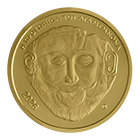
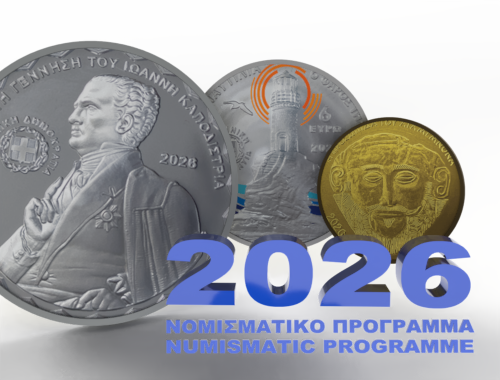
Heinrich Schliemann, polyglot, millionaire, adventurer and visionary, made it the purpose of his life to prove that Homer’s world had indeed existed. One hundred and fifty years ago, after unearthing Troy, he began excavations at Mycenae. The most spectacular among his finds was the “Mask of Agamemnon”, as Schliemann named it, believing to have found the grave of the legendary king. This exquisite artifact is depicted on this year’s coin in our Cultural heritage series.
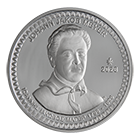
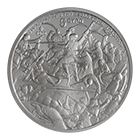
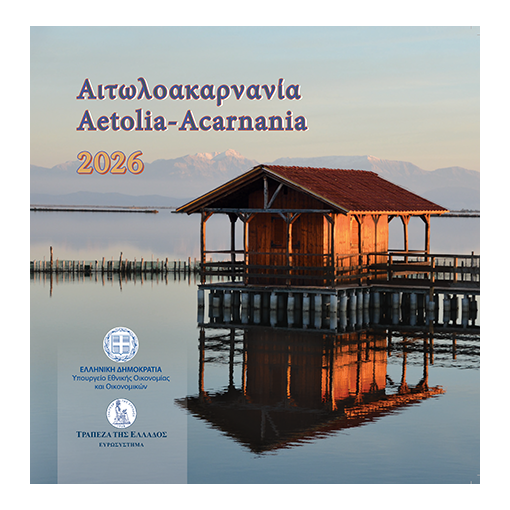
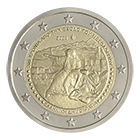
The 1820s, the decade when the Greeks fought for and won their independence, abounds in acts of heroism, glory, and often sacrifice. An unparalleled example is the Exodus of Messolonghi, to which we dedicate both a silver collector and a 2-euro circulation coin to mark the bicentennial of the event. Together we honour with a silver coin the Swiss philhellene Johann Jakob Meyer, father of Greek journalism, who was killed during the Exodus (Philhellenes series). Memories of the heroic last stand of the defenders of the Sacred City of Messolonghi haunt the region of Aetolia-Acarnania, this year’s theme of our Tourism series.
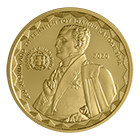
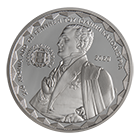
Ioannis Kapodistrias, who is portrayed on our most precious coin in this year’s programme, was a diplomat of international renown who helped the Greek Revolution in its vulnerable first phase and later made the first serious state-building effort as Governor of Greece.
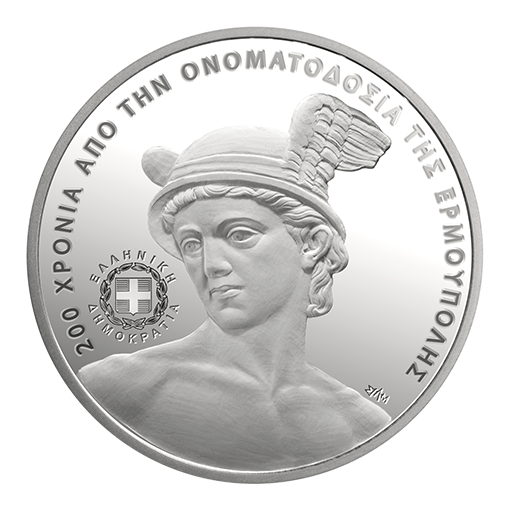
Like every war, the Greek Revolution produced not only heroes, but also victims among the civilian population, including refugees. To these people we turn our attention with a silver coin dedicated to 200 hundred years from the naming of Hermoupolis. Built on the island of Syros by refugees from several places devastated by the Turks, the new city thrived thanks to commerce and industry, becoming the gem of the Cyclades.
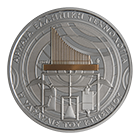
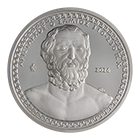
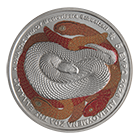
Turning to our long-standing series, we are issuing silver coins that feature Aristarchos of Samos, the first proponent of the heliocentric theory (in the Mathematicians series), and the hydraulis of Ktesibios, the first ever keyboard instrument (in our Ancient Greek technology series). Next in our Endangered fauna of Greece series is the Milos viper (Macrovipera schweizeri), the most threatened reptile species in Greece. One of the best known animal fables is the Lion and the mouse, which features on this year’s coin in our Aesop’s fables series.
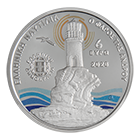
We are also launching a new series dedicated to the lighthouses of Greece, starting with the Tourlitis lighthouse of Andros.
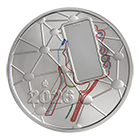
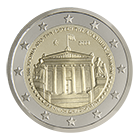
Finally, we celebrate important anniversaries by a silver coin commemorating 150 years from the invention of the telephone by Alexander Graham Bell and a 2-euro circulation coin to mark 100 years from the foundation of the Academy of Athens, guardian of the Greek language and culture.