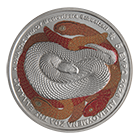
THE HYDRAULIS OF KTESIBIOS

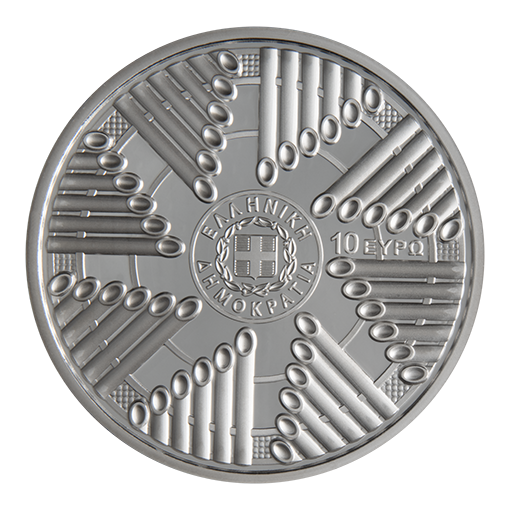
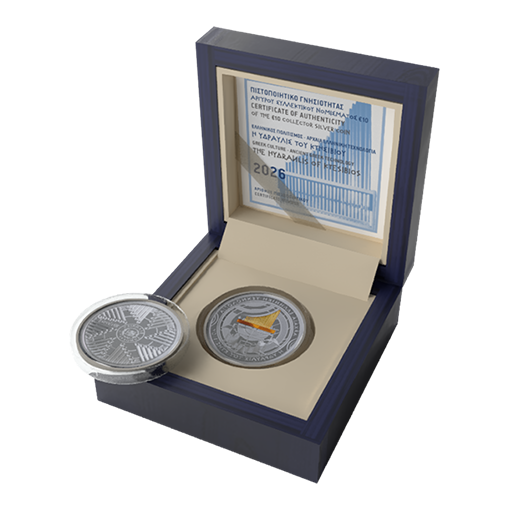
The hydraulis is the earliest keyboard instrument. It was invented by Ktesibios of Alexandria (3rd century BC), who noticed that sounds are generated by air as it is pushed by water along a pipe and forced out. The hydraulis of Ktesibios consisted of a water tank, air pumps, a keyboard, and pipes of varying lengths. It is described by Hero of Alexandria in his Pneumatics and by Vitruvius in On architecture, but we also have the remains of a bronze hydraulis dating to the 1st century BC, found in the excavations at Dion. The product of collaboration between archaeologists and musicologists, a reconstructed hydraulis sounded again at the European Cultural Centre of Delphi in 1999. The hydraulis was used by the Romans and later the Byzantines, who replaced the hydraulic mechanism with bellows, making it a portable wind instrument called the organon. Sent as a royal gift to the Frank kings Pepin and Charlemagne, the Byzantine portable pneumatic organ was introduced in Western Europe, where it evolved into the church organ, a mainstay of Western liturgical music.
The design of the hydraulis of Ktesibios on the obverse of the coin is based on a reconstruction by the Kotsanas Museum of Ancient Greek Technology.