
THE MASK OF AGAMEMNON
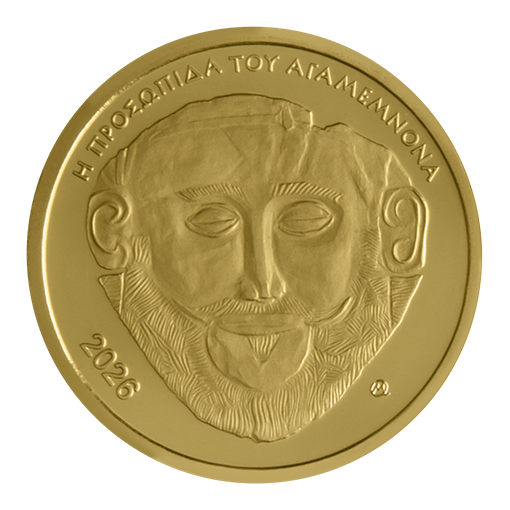
In the first year of his excavations at Mycenae in 1876, Heinrich Schliemann uncovered six shaft graves that contained numerous gold artifacts and are thought to be royal. His most spectacular find was a gold funerary mask, the so-called “mask of Agamemnon”. Believing to have found the grave of the legendary commander-in-chief of the Greeks in the Trojan War, Schliemann is said to have telegraphed to King George I of Greece: “I have gazed upon the face of Agamemnon”. However, as the archaeologists later ascertained, the mask is dated to the 16th century BC, much earlier than the supposed time of the Trojan War. It is made from a thick sheet of gold hammered against a wooden background, with the details chased on later with a sharp tool. It features the dignified image of a bearded man with an oval face, wide forehead, long fine nose and tightly closed thin lips. Among the five gold masks discovered by Schliemann in the shaft graves, this one stands out for its elegance, as well as the intensity of the facial characteristics. It belongs to the collection of the National Archaeological Museum in Athens.